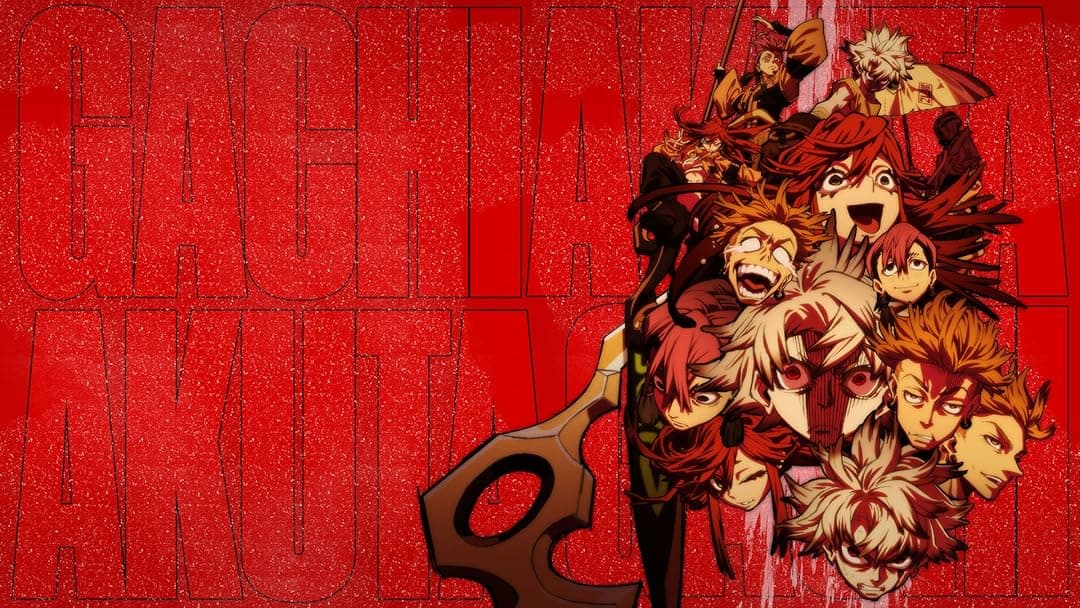
The dark shonen genre has undergone a dramatic evolution over the past decade. What was once defined by straightforward hero journeys and clear-cut villains has transformed into something far more brutal, morally complex, and emotionally devastating. Series like Attack on Titan, Chainsaw Man, Jujutsu Kaisen, and Tokyo Ghoul have reshaped audience expectations, proving that shonen manga can tackle existential horror, systemic oppression, and psychological trauma without pulling its punches.
Amid this crowded landscape of heavy hitters, one manga has been quietly but steadily carving out its own identity: Gachiakuta.
Serialized since 2022 in Kodansha’s Monthly Shonen Magazine, Gachiakuta is the brainchild of Kei Urana, a former assistant to Fire Force and Soul Eater creator Atsushi Okubo. With its grimy dystopian setting, raw sketch-heavy artwork, and unflinching exploration of class divide, the series has quickly gained a cult following. But the big question remains: can Gachiakuta become the next major dark shonen phenomenon?
Let’s explore what makes Gachiakuta stand out—and whether it truly has the potential to rival the genre’s giants.
Gachiakuta’s Worldbuilding: A Society Built on Discarded Lives
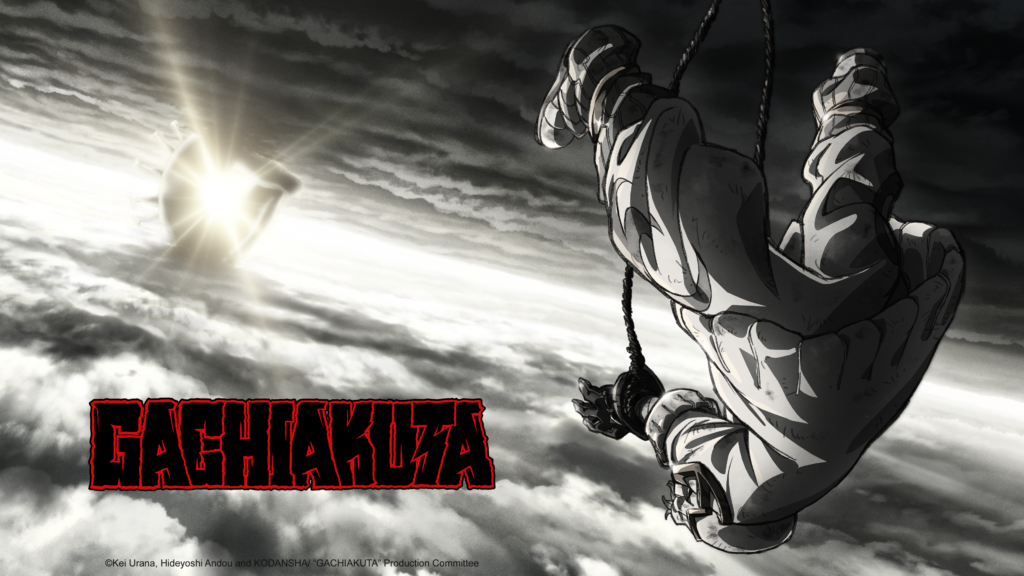
One of Gachiakuta’s strongest assets is its worldbuilding. The story is set in a deeply stratified society divided between “Heaven” and “the Abyss.” Heaven is a pristine floating city where the elite live in comfort, while the Abyss below serves as a dumping ground for garbage—and for people deemed worthless by society.
This isn’t subtle symbolism, and that’s exactly the point.
The Abyss is a sprawling wasteland made of trash, decay, and forgotten lives. It’s a visual and narrative metaphor for class inequality that feels disturbingly relevant. Rather than relying on exposition, Gachiakuta lets its environment do the storytelling. Every rusted structure and pile of refuse reinforces the idea that society literally discards what it no longer values.
Our protagonist Rudo is falsely accused of murder and thrown into the Abyss, where he discovers that trash itself can be weaponized into powerful tools called Jinki. These weapons are wielded by fighters known as Cleaners, individuals who survive by repurposing society’s refuse.
The aesthetic feels like a collision of Mad Max, Dorohedoro, and Tokyo Ghoul, blended with the exaggerated character design sensibilities of Atsushi Okubo. The result is a world that feels filthy, oppressive, and alive—one that perfectly supports the manga’s themes.
Themes That Define Modern Dark Shonen
Dark shonen lives or dies by its thematic depth, and Gachiakuta excels here. At its core, the series is an exploration of:
Class discrimination
Dehumanization
Moral ambiguity
Identity and self-worth
The residents of Heaven don’t just ignore the Abyss—they actively sustain it by dumping their waste and unwanted people into it. This mirrors real-world systems of inequality, making Gachiakuta feel more socially conscious than many of its contemporaries.
Rudo’s journey isn’t a traditional revenge story. While anger and grief drive him, his true struggle is reclaiming his humanity in a world that treats him as disposable. The manga asks a brutal question: when society treats you like trash, do you become trash—or do you redefine your worth?
This thematic focus places Gachiakuta alongside series like Attack on Titan and Chainsaw Man, but with a more grounded, class-focused perspective rather than cosmic horror or absurdist nihilism.
Rudo and the Rise of the Imperfect Protagonist
Rudo is a textbook example of the modern dark shonen protagonist done right. He isn’t optimistic, cheerful, or morally pure. He’s angry, traumatized, and deeply flawed.
After being framed for killing his foster father—the only person who ever showed him kindness—Rudo is thrown into the Abyss with nothing but grief and rage. Unlike many shonen leads, he doesn’t start with hidden powers or a destined role. His growth is painful, incremental, and earned.
What makes Rudo compelling is his emotional realism. His anger feels justified. His mistrust feels earned. His refusal to become cruel despite everything is what defines his strength.
If Tokyo Ghoul’s Kaneki represents identity horror and Black Clover’s Asta embodies relentless optimism, Rudo sits somewhere in between—driven by survival rather than hope.
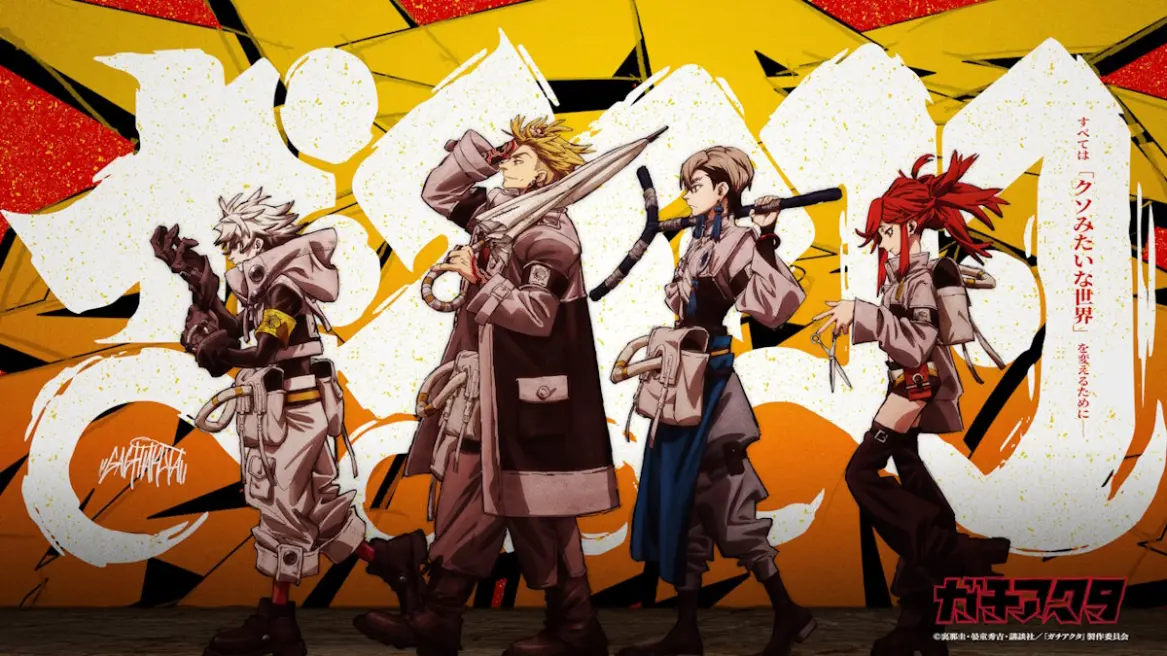
A Supporting Cast Written in Shades of Gray
Gachiakuta avoids simple heroes and villains. Characters like Enjin and Zanka bring philosophical depth to the story, each representing different responses to a broken system.
Enjin questions the meaning of worth and purpose in a society that labels people as disposable. Zanka embodies brutal pragmatism—survive first, ask questions later. None of these perspectives are presented as entirely right or wrong.
This moral ambiguity mirrors the ensemble storytelling strength of Jujutsu Kaisen, where antagonists often feel like protagonists of their own narratives. Every character in Gachiakuta is shaped by the system that abandoned them, making their actions understandable even when they’re reprehensible.
Art Style and Visual Identity: Chaos With Intent
Kei Urana’s artwork is one of the most distinctive aspects of Gachiakuta. While the influence of Atsushi Okubo is undeniable, Urana’s style leans heavily into rough, sketch-like linework that gives the manga a raw, unfinished energy.
Action scenes feel explosive and unpredictable. Panels are dynamic, messy, and alive—perfectly matching the chaos of the Abyss. The sketchy aesthetic enhances the dystopian atmosphere, making the world feel unstable and dangerous.
Fight choreography involving weaponized trash is especially creative. Garbage transforms into swords, armor, and bizarre tools, resulting in battles that feel visually fresh even in a genre saturated with flashy combat.
The art doesn’t try to be pretty—and that’s precisely why it works.
How Gachiakuta Compares to Dark Shonen Giants
So where does Gachiakuta stand among the titans of dark shonen?
Attack on Titan excels at large-scale narrative twists and geopolitical storytelling.
Chainsaw Man thrives on chaos, shock value, and emotional whiplash.
Jujutsu Kaisen balances slick action with character-driven tragedy.
Tokyo Ghoul explores identity and alienation through psychological horror.
Gachiakuta differentiates itself through setting-driven storytelling and class commentary. Its garbage-world isn’t just aesthetic—it’s integral to the story’s mechanics and themes.
The biggest unknown is longevity. Many dark shonen series struggle with pacing and narrative cohesion as they grow. However, Kodansha’s consistent support and growing international interest suggest confidence in the series’ future. With anime adaptation rumors circulating since late 2024, Gachiakuta could be one strong adaptation away from mainstream breakout status.
Final Verdict: The Next Dark Shonen Hit?
Gachiakuta has all the ingredients of a future classic:
A unique, thematically rich world
Morally complex characters
Distinctive, high-impact artwork
A protagonist built for modern shonen audiences
Will it surpass Attack on Titan or Chainsaw Man in cultural impact? That depends on factors beyond the manga itself—anime production quality, marketing, and timing will play crucial roles.
What’s undeniable is this: Gachiakuta isn’t just another dark shonen imitator. It’s a bold, emotionally charged series that understands why the genre resonates so deeply today.
Whether it becomes the next king of dark shonen or a beloved cult classic like Dorohedoro, Gachiakuta is absolutely worth your attention—especially before its inevitable anime adaptation pushes it into the spotlight.
If You Loved This Deep Dive, Check Out These Related Posts:
Why Diablo Is So Loyal to Rimuru – Explore the complex devotion between demon and slime lord in That Time I Got Reincarnated as a Slime
Why Ayanokoji Refuses Emotional Attachment in Classroom of the Elite – Unpack the psychology behind anime's most calculating protagonist